


 English
 Español


Every society that has left a record behind has held an opinion about the size and shape of the human body — and almost none of those opinions have matched each other. The anthropological literature is not a story of one universal standard with local decoration on top.
It is a record of genuinely different answers to the same question, produced by different economies, faiths, laws and image cultures. Reading that record closely is the fastest way to understand why the idea of a single typical body has never survived contact with the evidence — a point explored further in our piece on why societies linked physical size with social power.
What follows draws on published cross-cultural psychology and ethnography rather than travel writing. Where a practice belongs to the past, that is stated. Where it continues, that is stated too.
In Brief
- Food supply is the single best-documented predictor of body-weight ideals across societies (Anderson et al., 1992; Swami et al., 2010).
- Historical practices such as footbinding and corsetry were shaped by labour and status as much as by aesthetics (Ko, 2005; Steele, 2001).
- Attitudes toward female anatomy are documented across at least as wide a range as attitudes toward male anatomy.
- Religion, statute, economics and media each leave traceable marks on what a population treats as typical.
- Within-country variation frequently exceeds between-country variation.
The Question Anthropologists Actually Ask
Researchers working comparatively rarely ask which body is best. They ask what a given community treats as unremarkable, what it treats as admirable, and how those two categories drift apart. The distinction matters. In many documented settings the admired body is deliberately rare — achievable only through time, food or labour that most members of the society do not have.
The methodological difficulty is real. Anne Becker's fieldwork in Fiji, published as Body, Self, and Society: The View from Fiji (University of Pennsylvania Press, 1995), found that Fijian villagers evaluated bodies primarily as evidence of how well a household was caring for its members, rather than as personal property to be judged. A questionnaire built around individual body satisfaction, Becker argued, would have measured almost nothing there. Comparison requires translating the question first.
What Scarcity Does to a Body Ideal
The most durable finding in the cross-cultural literature concerns food supply. Anderson, Crawford, Nadeau and Lindberg, publishing in Ethology and Sociobiology in 1992, reviewed ethnographic material from 54 societies and reported that communities with unreliable food supplies consistently favoured heavier female bodies, while those with dependable supplies favoured slimmer ones.
That pattern was tested at scale by the International Body Project, published in Personality and Social Psychology Bulletin in 2010, which surveyed more than 7,000 participants across 26 countries in 10 world regions. Swami and colleagues found that participants in lower-socioeconomic-status sites rated heavier female figures as more attractive, and that the difference tracked economic conditions more closely than it tracked geography or region.
Two documented traditions sit at the far end of that spectrum. Rebecca Popenoe's ethnography of Azawagh Arab communities in Niger, Feeding Desire (Routledge, 2004), described a system in which a substantial female body was read as a sign of stillness, seclusion and moral seriousness rather than simply of wealth. Pamela Brink's earlier study of the Annang of south-eastern Nigeria, published in Medical Anthropology in 1989, documented seclusion periods sometimes called fattening rooms, in which a young woman received instruction alongside a richer diet before marriage. Brink noted that the institution's teaching function was, in participants' own accounts, at least as important as its physical outcome.

Documented Body Norms in the Comparative Literature
Each entry reflects a specific published study or ethnography, not a general claim about a region.
| Society / Region | Period Documented | What the Literature Records | Source |
|---|---|---|---|
| Classical Athens | 5th–4th c. BCE | Small proportions in art linked to self-command; large proportions assigned to comic and satyr figures | Dover, 1978 |
| Imperial China | c. 10th c. – 1912 | Footbinding tied to textile labour, household status and female craft knowledge | Ko, 2005 |
| Edo Japan | c. 1700–1820 | Exaggerated proportions in shunga understood as pictorial emphasis, not depiction | Screech, 1999 |
| Victorian Britain | 19th century | Extreme waist figures circulated in polemic; surviving garments show modest reductions | Steele, 2001 |
| Dani, Highland New Guinea | Documented 1960s | The horim as everyday dress signalling occasion and standing | Heider, 1970 |
| Annang, Nigeria | Documented 1980s | Pre-marriage seclusion combining instruction with a richer diet | Brink, 1989 |
| Azawagh Arabs, Niger | Documented 1990s | Physical substance read through ideas of stillness and seclusion | Popenoe, 2004 |
| Baganda, Uganda | Historic & contemporary | Ssenga instruction transmitted between women, now also via urban media | Tamale, 2005 |
| Fiji | 1995 & 1998 surveys | Measurable shift in reported eating attitudes after television arrival | Becker et al., 2002 |
| 26 countries, 10 regions | Published 2010 | Body-weight ideals tracked socioeconomic conditions more closely than geography | Swami et al., 2010 |
Bodies Shaped by Craft
Several societies have altered bodies directly rather than merely admiring particular ones. Two of the best-documented cases have also been the most persistently misread.
Footbinding was practised in China from roughly the tenth century until the early twentieth, and was formally prohibited after 1912. Dorothy Ko's Cinderella's Sisters: A Revisionist History of Footbinding (University of California Press, 2005) argued from household records and women's own writings that the practice was bound up with textile labour, domestic status and female-controlled craft knowledge, and that the familiar explanation of male preference alone does not account for its regional patterning or its long survival.
Valerie Steele made a comparable argument about nineteenth-century European corsetry in The Corset: A Cultural History (Yale University Press, 2001). Steele's reading of surviving garments and period sources found that the most extreme waist measurements circulated in reform pamphlets and satirical journalism rather than in wardrobes, and that everyday corsetry produced far more modest reductions than the polemics claimed.
In Highland New Guinea, Karl Heider's The Dugum Dani (Aldine, 1970) recorded the horim, a gourd worn by Dani men as everyday dress. Heider observed that length and decoration signalled occasion and standing, and that men owned several for different contexts. The item was a garment carrying social information, not a claim about anatomy — a distinction easily lost in secondary retellings.
"The admired body in a given society is very often the rare one — reachable only through time, food or labour that most members of that society do not have."
Attitudes Toward Female Anatomy
The ethnographic record on female genital anatomy is at least as varied as the record on male anatomy, and considerably less often summarised accurately.
Sylvia Tamale, writing in the IDS Bulletin in 2005, documented the ssenga institution among the Baganda of Uganda — a formalised role, traditionally held by a paternal aunt, responsible for instructing young women in marriage, conduct and bodily matters. Tamale described labia elongation as one element within a broader curriculum of instruction transmitted between women. Brigitte Bagnol and Esmeralda Mariano's fieldwork in Mozambique, published in Culture, Health & Sexuality in 2008, recorded similar practices in southern Africa and noted an active scholarly disagreement over whether such traditions belong in the same analytical category as other forms of genital modification — a debate that remains unresolved in the literature.
Classical South Asian texts took a different approach altogether. The Kama Sutra, in the translation by Wendy Doniger and Sudhir Kakar (Oxford University Press, 2002), sets out a threefold classification of both men and women by anatomical proportion, with the stated purpose of matching partners rather than ranking them. The scheme treats proportional compatibility, not magnitude, as the meaningful variable — a framing largely absent from later European writing on the subject.
Contemporary measurement work has confirmed how wide the documented range is. Lloyd and colleagues, publishing in BJOG in 2005 under the title "Female genital appearance: 'normality' unfolds," measured 50 women and recorded labial length spanning roughly 20 to 100 mm (0.8 to 3.9 in), with comparable variation in every other dimension examined. The authors' conclusion was that the studied range was far broader than the depictions in circulation suggested.
Cultural Insight
The Ssenga of Buganda
Among the Baganda of Uganda, the ssenga — traditionally a paternal aunt — held a recognised teaching role covering marriage, conduct and bodily knowledge. Sylvia Tamale's 2005 study in the IDS Bulletin documented how the role adapted to urban Kampala, appearing in newspaper columns and radio programmes.
Tamale noted that the institution survived not by resisting modern media but by moving into it — a reminder that traditional bodily knowledge and contemporary broadcasting are not always opposed forces.
Attitudes Toward Male Anatomy
Classical Athens supplies the clearest historical case of an ideal running opposite to modern assumption. Kenneth Dover's Greek Homosexuality (Harvard University Press, 1978) established from vase painting and sculpture that Athenian visual convention associated small, tapered genitals with self-command and civic virtue, while conspicuously large proportions were assigned to satyrs, comic figures and characters marked as lacking restraint. The convention held across roughly the fifth and fourth centuries BCE.
Edo-period Japan reversed the convention without intending realism. Timon Screech's Sex and the Floating World (Reaktion Books, 1999) argued that the pronounced proportions in shunga woodblock prints of the eighteenth and early nineteenth centuries functioned as pictorial emphasis — a way of directing the eye — and were understood as such by contemporary viewers. Neither the Athenian nor the Japanese convention was a report on bodies. Both were systems of visual meaning.
The contemporary measurement picture is set out in Veale and colleagues' 2015 review in BJU International, which pooled data from up to 15,521 men measured by researchers rather than self-reported, and produced a mean erect length of 13.12 cm (5.16 in). That figure is frequently quoted without its caveats; our analysis of why a single global average cannot represent four billion men examines the sampling limitations in detail.
Perception and measurement diverge sharply. Lever, Frederick and Peplau's survey of 52,031 respondents, published in Psychology of Men & Masculinity in 2006, found that 85% of women reported satisfaction with their partner's proportions while only 55% of men reported satisfaction with their own. Muscularity shows a similar gap: Pope and colleagues, writing in the American Journal of Psychiatry in 2000, tested men in Austria, France and the United States and found that participants in all three selected an ideal body carrying roughly 13 kg (28 lb) more muscle than they had.
By the Numbers
Religion, Law, Economics and Media
Four forces recur across the literature as shapers of body norms.
Religion supplies the framework in which bodily practice acquires meaning. Popenoe's Azawagh material showed physical substance being interpreted through ideas of modesty and seclusion drawn from religious teaching, not from aesthetics alone.
Law shapes what people can see. Anne Allison's Permitted and Prohibited Desires (University of California Press, 1996) traced how Article 175 of Japan's Penal Code produced the distinctive visual conventions of postwar Japanese publishing — a case in which statute directly determined a population's baseline visual reference.
Economics operates through the food-supply relationship documented by Anderson and by the International Body Project, and through the labour and status arrangements Ko identified behind footbinding.
Media is the most recently measurable variable. Becker and colleagues, publishing in the British Journal of Psychiatry in 2002, studied ethnic Fijian adolescent girls before and after television reached their province, and recorded a measurable shift in reported eating attitudes across a three-year window. The study is cited widely because the timing allowed a comparatively clean before-and-after observation.
No Culture Speaks With One Voice
The International Body Project found as much variation inside countries as between some of them, with urban and rural sites in the same nation frequently diverging. Ko's household evidence showed footbinding varying substantially by province, class and decade. Yu and Shepard's 1998 report in Nature found that Matsigenka respondents in Peru with more outside contact gave answers closer to Western samples than those with less — within a single ethnic group.
Any statement beginning "in that culture, they believe" is therefore doing something the underlying data does not support.
Did You Know?
Two of the best-known historical conventions about male anatomy point in opposite directions — and neither was meant as description. Athenian sculptors used restrained proportions to signal civic self-command, while Edo-period Japanese printmakers used exaggerated ones to direct the viewer's eye. Both were visual grammar, and both have been misread by later audiences as evidence about actual bodies.
The Limits of Comparison
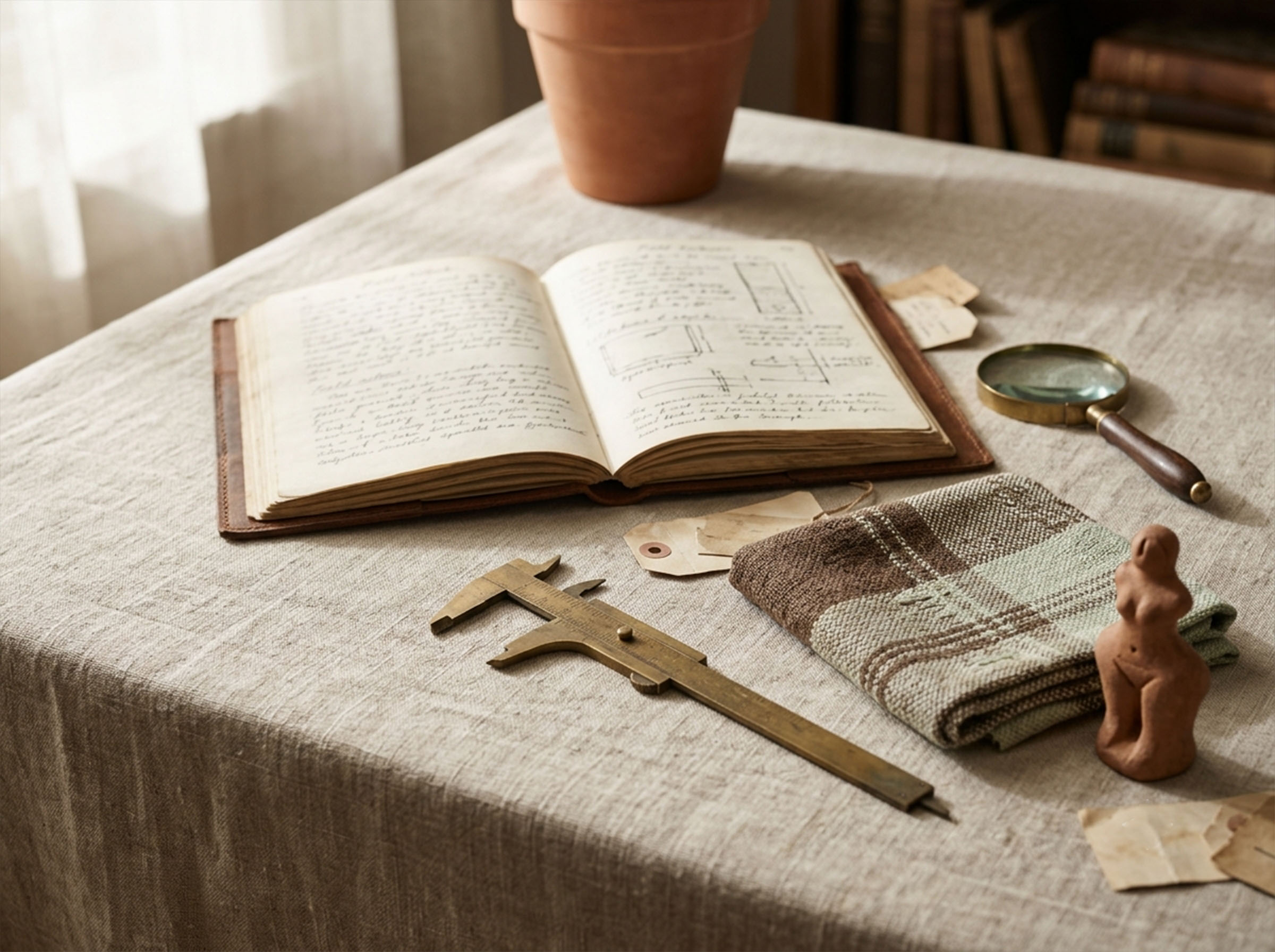
Some material resists translation entirely. Soffer, Adovasio and Hyland, writing in Current Anthropology in 2000, re-examined the Upper Palaeolithic figurines commonly cited as evidence of ancient body ideals and argued that the detail long read as anatomical emphasis is in several cases woven textile — basketry hats, belts and skirts — making the objects a record of craft rather than of desire. Roughly 25,000 years of intervening silence means neither reading can be confirmed.
What survives comparison is narrower but firmer: that the documented range of admired and typical bodies is far wider than any one society's assumptions, and that the mechanisms producing those norms — food supply, faith, statute, image — are visible and traceable even when the norms themselves cannot be ranked against one another.
Reader Questions
Disclaimer
- All content on this website—including articles, educational materials, and interactive calculators—is for informational, educational, and entertainment purposes only. The calculations, percentiles, and outputs generated by tools on this site are based on general statistical data and mathematical models; they do not constitute medical data, a clinical assessment, or a diagnosis.
- Nothing contained on this website is a substitute for professional medical advice, diagnosis, or treatment. Always seek the guidance of a qualified healthcare professional or urologist with any questions you have regarding physical development, anatomy, or health conditions. Reliance on any information or tools provided by this website is solely at your own risk.


